How to Make Tunisian Crochet More Stretchy: Meet the Extended Return Pass (ERetP)
If you love Tunisian crochet but sometimes struggle with the fabric feeling a bit firm or not quite stretchy enough—especially for things like hats—there’s a simple adjustment that can make a huge difference: the Extended Return Pass, or ERetP.
I’ve started using it in all my hats, and honestly, it’s one of those little changes that quietly transforms your fabric without altering the look of your stitches. What ever the Tunisian stitch, the ERetP works with all of them because it only changes the return row, not the forward pass.
Why the ERetP Helps
Traditional Tunisian return passes can tighten up the fabric, making it look neat but not particularly flexible. With hats, that can be tricky—real heads come in all shapes and sizes, and you need a bit more give.
The ERetP adds a tiny bit of length and softness to each return step, giving the fabric:
More stretch
More drape
A real body fit
It does this without changing the appearance of the front of your work or the structure of your Forawrd Pass stitches. Everything still looks like classic Tunisian crochet.
How to Work the ERetP
It’s very simple:
Working on a flat project:
Start the return pass as normal with: YO, pull through 1 loop (this makes your edge nice and tidy)
Working flat:
Start the return pass as normal: YO, pull through 1 loop (this keeps your edge neat)
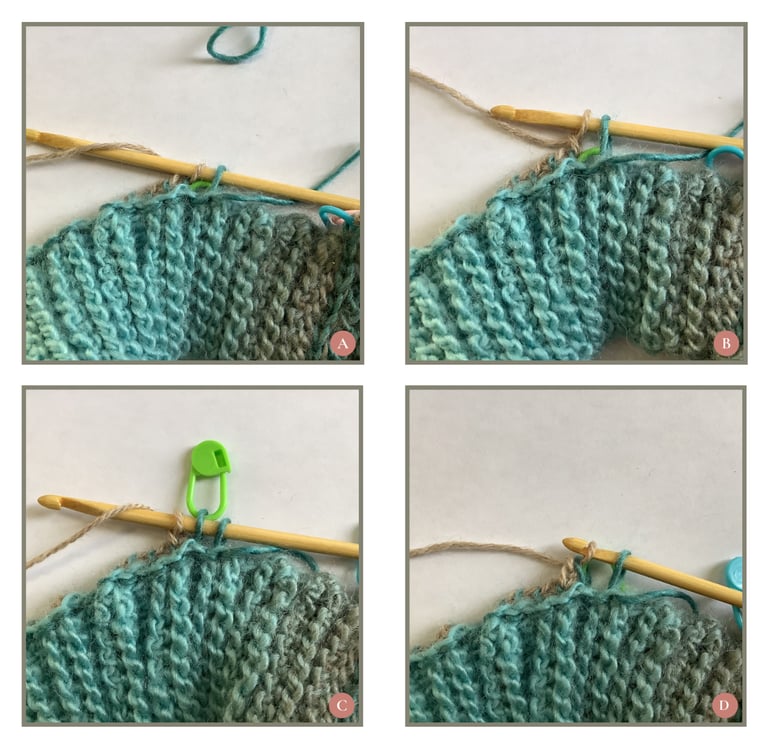
Then for the rest of the row: A: YO, B: Ch 1, C: YO, D: pull through 2 loops to the end
Working in the round:
A: YO, B: Ch 1, C: YO, D: pull through 2 loops to the end all the way around (See images below)
That’s it. You’re just adding a gentle extension into each return step. It becomes automatic very quickly.
A Quick Note About the Fabric “Widening”
You might notice that right after the return pass, the fabric sometimes looks a little wider, especially at the beginning of a project.
Do not worry—this is absolutely normal.
As soon as you work the next forward pass, everything lines up again and the fabric settles into its true shape. This is just the yarn relaxing around the extended return, and it neatens up as the rows stack up.
When to Use the ERetP
You can use it for:
Hats
Cowls
Socks
Anything where you want more stretch
Or honestly… all your Tunisian projects, if you like how it feels
Because the ERetP doesn’t change the look of your stitches, it’s a completely safe 'upgrade' from the standard RetP.